
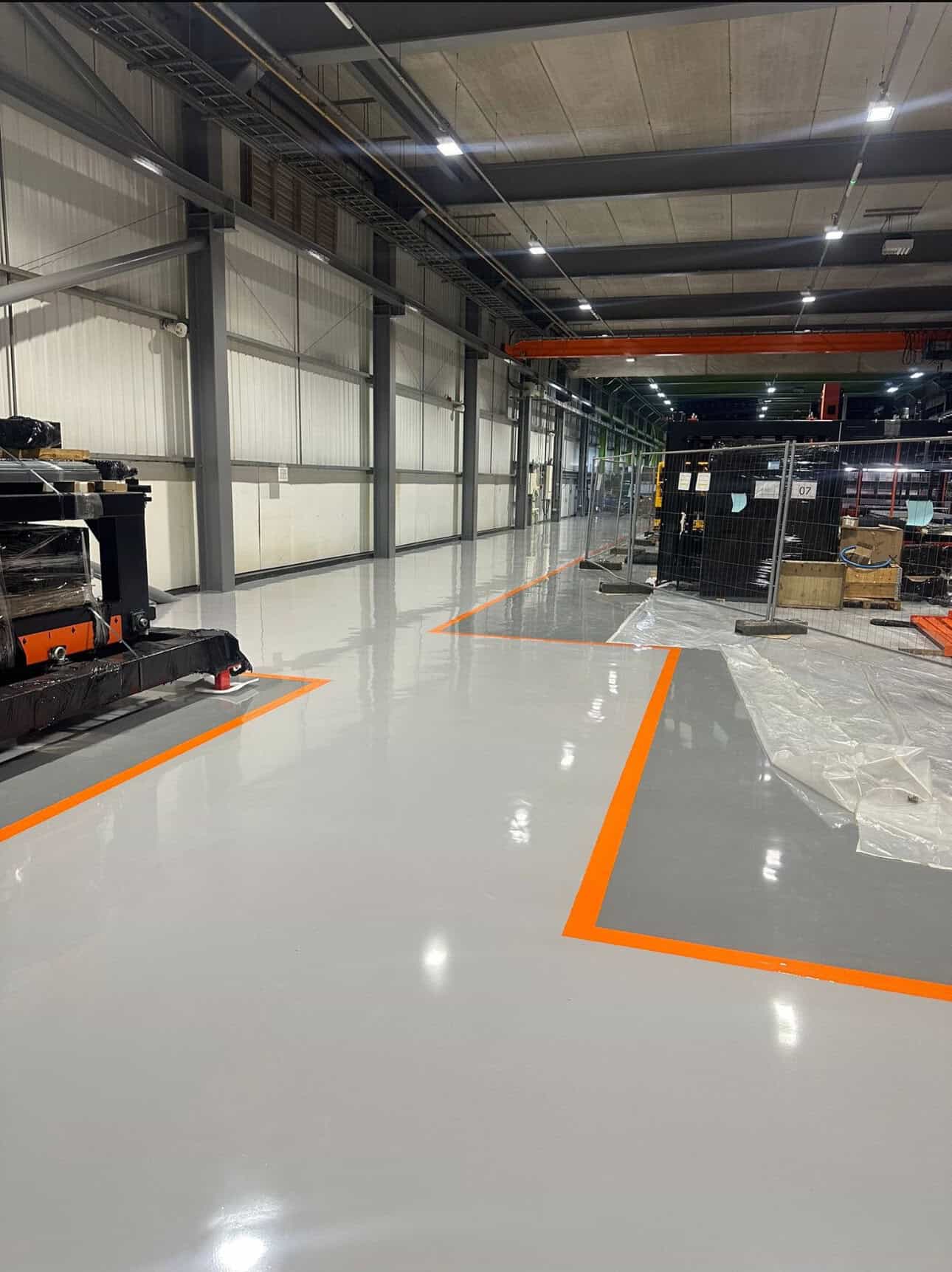
Commercial premises need flooring that can cope with considerably more than everyday foot traffic. Warehouses, factories, workshops, retail units, commercial kitchens, garages and industrial facilities all place different demands on their floors, with heavy equipment, spillages, constant movement and regular cleaning potentially causing significant wear over time.
For businesses in Birmingham, choosing the right flooring system can therefore have an important impact on the safety, appearance and day-to-day operation of a premises. Epoxy resin flooring is a popular option because it creates a durable, seamless surface designed to withstand demanding commercial environments while remaining relatively straightforward to maintain.
From improving the condition of an existing concrete floor to providing a hard-wearing surface in areas exposed to heavy traffic, epoxy resin flooring can offer a practical long-term solution for a wide variety of businesses.
What Is Epoxy Resin Flooring?
Epoxy resin flooring is a specialist floor coating system formed by combining resin with a hardener. Once applied and cured, the materials create a tough surface that bonds to a suitably prepared substrate.
Unlike traditional floor coverings that may have joints, seams or separate sections, resin systems can create a continuous surface across the area. This makes them particularly useful in commercial environments where cleanliness, durability and ease of maintenance are important considerations.
The final specification can vary depending on how the floor will be used. A commercial warehouse, for example, may have very different requirements from a food preparation area or engineering workshop. Factors such as traffic levels, equipment, potential contaminants, cleaning methods and the condition of the existing floor should all be considered before a system is selected.
This is one reason professional assessment and preparation are important when installing epoxy flooring.
Why Is Flooring So Important in Commercial Premises?
It can be easy to overlook the importance of flooring when planning or maintaining a commercial property. However, the floor is one of the surfaces that employees, customers, vehicles and equipment interact with every day.
A damaged, worn or unsuitable floor can create a range of problems. Cracks and uneven areas can become trip hazards, while worn surfaces can be more difficult to clean effectively. In industrial environments, damaged concrete may also deteriorate further when exposed to heavy machinery, pallet trucks, forklifts or repeated impact.
The Health and Safety Executive highlights the importance of suitable flooring and effective management of slip and trip risks within workplaces. Its guidance explains that floors should be suitable for the work being carried out, maintained properly and kept free from conditions that could create risks.
Businesses can read the HSE guidance on preventing slips and trips at work for further information.
Choosing an appropriate flooring system is therefore not simply an aesthetic decision. It can form part of the wider approach to maintaining a safe, functional and professional workplace.
Durability for Busy Birmingham Workplaces
One of the main reasons commercial businesses choose epoxy resin flooring is its durability.
Commercial floors can experience significantly higher levels of use than domestic floors. A warehouse may have forklifts and pallet trucks moving across the surface throughout the day, while a workshop could have heavy machinery, tools, oils and other substances present.
A correctly specified resin system can provide a robust surface capable of handling demanding conditions. This can help businesses protect the underlying floor and reduce the likelihood of premature deterioration caused by everyday commercial activity.
For businesses considering an upgrade to an existing floor, professional epoxy resin flooring in Birmingham can provide an opportunity to create a more suitable working surface without necessarily replacing the entire floor structure.
The durability of the finished system will depend on the specification, preparation, installation and conditions in which it is used. This is why flooring should be selected according to the actual requirements of the premises rather than simply choosing a coating based on appearance.
Easier Cleaning and Maintenance
Commercial premises need to be kept clean, particularly where employees, customers, products or machinery are present. Flooring that is difficult to clean can make routine maintenance more time-consuming and potentially allow contaminants to remain on the surface.
The seamless nature of many resin flooring systems can make routine cleaning more straightforward. With fewer joints and gaps than some traditional flooring options, there are fewer areas where dirt and debris can collect.
This can be particularly beneficial in environments where regular cleaning is required.
Industrial facilities, workshops and commercial units may encounter substances such as oil, grease, dust, dirt or other contaminants. A suitable resin flooring system can provide a hard-wearing surface that is easier to keep clean as part of an appropriate maintenance regime.
Of course, no flooring system removes the need for good housekeeping. Spillages should still be dealt with promptly and cleaning procedures should be appropriate for the environment.
Improving Workplace Safety
Safety should be a major consideration when choosing commercial flooring.
Slips and trips remain a significant workplace risk, and the condition and characteristics of a floor can contribute to this risk. HSE guidance specifically identifies factors such as floor condition, contamination, cleaning methods and the suitability of flooring as considerations when managing slip hazards.
Epoxy resin flooring can be specified with suitable surface characteristics for the environment in which it will be installed. In areas where water, oils or other contaminants may be present, the flooring specification needs to take the expected conditions into account.
This is particularly important for commercial premises where employees regularly move between different work areas.
Flooring can also help create clearer working environments through the use of different colours, finishes and designated areas. Depending on the system selected, businesses may be able to use the floor itself to help distinguish pedestrian routes, work zones or operational areas.
The flooring should form part of a wider workplace safety strategy rather than being considered a standalone solution.
A Professional Appearance for Commercial Properties
The practical benefits of epoxy flooring are important, but appearance can also make a difference.
A clean, well-maintained floor can immediately improve the appearance of a commercial premises. This can be particularly valuable for businesses that regularly welcome customers, suppliers, contractors or other visitors.
Worn concrete, stained flooring and damaged surfaces can make an otherwise well-maintained property appear tired. A professionally installed resin system can create a more uniform and modern finish.
This can be particularly useful in showrooms, retail environments, workshops, reception areas and other commercial spaces where presentation matters.
There can also be practical benefits to using different finishes or colours. A carefully considered flooring design can help establish distinct areas within a larger commercial premises while contributing to a consistent overall appearance.
Suitable for a Range of Commercial Environments
One of the advantages of resin flooring is its versatility. Different commercial environments have different flooring requirements, but epoxy systems can be specified for a wide range of applications.
Warehouses need surfaces capable of handling constant movement and heavy equipment. Engineering and manufacturing environments may need resistance to demanding working conditions and regular cleaning. Garages and workshops can require flooring suitable for areas where oils, grease and other contaminants may be present.
Commercial kitchens and food-related premises also require flooring that can be maintained to a high standard, while retail and customer-facing environments may place greater emphasis on both durability and appearance.
The important consideration is that the system needs to be appropriate for the intended application.
Where an existing concrete floor is unsuitable for a resin coating without additional work, specialist preparation may be necessary first. This could involve repairs, mechanical preparation or other measures to ensure the substrate is ready for the flooring system.
Businesses requiring this stage of the work can also explore floor preparation in Birmingham as part of the wider flooring process.
Why Floor Preparation Matters
The quality of a resin floor does not simply depend on the coating itself. The condition of the substrate and the preparation carried out before installation are also critical.
Concrete floors can contain dust, laitance, old coatings, grease, contaminants or areas of damage. If these issues are not properly addressed, they can affect how effectively the resin system bonds to the surface.
Preparation may therefore involve removing contaminants, mechanically preparing the substrate, repairing defects and ensuring the surface is suitable for the selected system.
In some commercial projects, a floor may require additional levelling or smoothing before the resin system is installed. This is where services such as self smoothers in Birmingham may form part of a wider flooring specification.
For particularly demanding environments, businesses may also need to consider heavy duty floor screed in Birmingham to create an appropriate foundation.
Taking the time to prepare the floor properly can help create a more reliable finished surface and reduce problems associated with poor adhesion or an unsuitable substrate.
Reducing Long-Term Disruption
Flooring work inevitably requires some level of planning, particularly within an operational commercial premises.
A damaged or unsuitable floor can also cause disruption if it continually requires repairs or becomes difficult to maintain. Replacing or upgrading a flooring system can therefore be an opportunity to address recurring issues and create a surface more appropriate for the demands of the business.
The exact installation process and curing times will depend on the system selected, the size of the area and the conditions of the premises. Businesses should plan flooring work around their operational requirements and discuss these considerations with their flooring contractor.
Good planning can help minimise unnecessary disruption while ensuring the finished floor is given sufficient time and suitable conditions to cure correctly.
Protecting the Existing Floor
Another important benefit of a resin system is that it can provide a protective layer over a suitable substrate.
Commercial concrete floors can be exposed to constant traffic, impact, abrasion and contaminants. Over time, this can contribute to deterioration and create a floor that becomes increasingly difficult to maintain.
A suitable coating system can help protect the underlying surface from everyday wear and make the floor easier to maintain.
This does not mean that epoxy resin flooring is completely maintenance-free. Regular cleaning, inspections and appropriate repairs remain important. However, establishing a durable surface from the outset can support the long-term condition of the floor.
Businesses can also explore resin floor coatings in Birmingham where a different coating specification may be more appropriate for the requirements of the premises.
Choosing the Right Flooring for Your Birmingham Premises
There is no single flooring solution that is suitable for every commercial building. The right system needs to reflect how the floor will actually be used.
Before deciding on epoxy resin flooring, businesses should consider the level of pedestrian and vehicle traffic, the type of equipment used, potential spillages, cleaning requirements, temperature conditions and the existing condition of the substrate.
The intended appearance of the floor may also influence the specification, particularly for customer-facing premises.
A professional flooring contractor can assess these factors and recommend an appropriate system rather than treating every commercial floor in the same way.
This approach is particularly important for larger industrial and commercial premises, where flooring represents a significant investment and the consequences of choosing an unsuitable system can be considerable.
Is Epoxy Resin Flooring Worth Considering?
For many commercial premises, epoxy resin flooring can provide a practical combination of durability, cleanliness, appearance and functionality.
The flooring itself is only one part of a successful installation. Appropriate preparation, correct system specification and professional application all contribute to the performance of the finished surface.
For businesses operating in Birmingham, upgrading an existing floor can be a worthwhile consideration where the current surface is becoming worn, difficult to maintain or unsuitable for the demands of the workplace.
A properly specified resin floor can create a hard-wearing surface designed around the needs of the business while helping to maintain a cleaner, more professional and functional working environment.
For commercial property owners and managers considering an upgrade, exploring epoxy resin flooring in Birmingham alongside the wider range of flooring preparation and coating services available from Lazercote can help establish which approach is most appropriate for the premises.